Why Over-Giving Hurts Your Business
When “That’s Just Who I Am” Becomes Self-Sabotage
Many professionals pride themselves on being generous.
They go the extra mile, they give more than expected and they want clients to feel truly supported.
At first glance, this looks like commitment, integrity, and care. Nothing wrong with that, right?
But from a Human Design perspective, over-giving is one of the most common, and costly, forms of business self-sabotage.
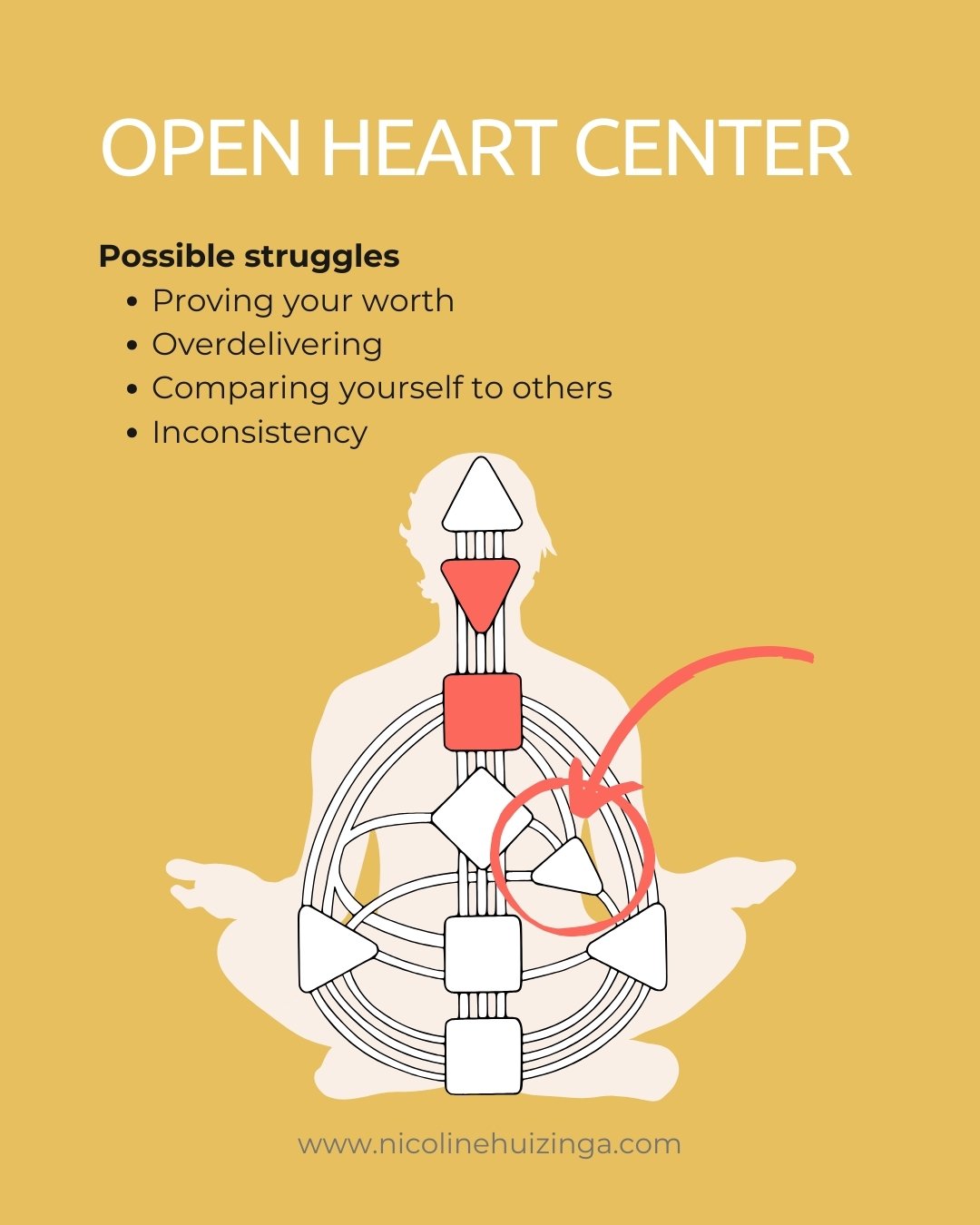
Especially for people with an open Heart/Ego center.
Why over-giving feels natural and even virtuous
In business culture (and upbringing of girls!), generosity is often praised.
Be helpful, add more value and exceed expectations.
So when someone:
- overdelivers on their services
- undercharges “just to get started”
- keeps adding extras to justify their price
it’s rarely questioned.
It’s framed as:
- being client-focused
- being service-oriented
- being “the kind of person who really cares”
But beneath this behavior, a deeper dynamic is often at play.
The open Heart/Ego center and the need to prove worth
In Human Design, the Heart/Ego center relates to:
- self-worth
- willpower
- value
- promises and commitments
When this center is open (white), a person does not have consistent access to an internal sense of worth.
Instead, worth is often unconsciously measured through:
- effort
- results
- appreciation
- external validation
This can lead to a subtle but powerful pattern in business: trying to earn worth through giving more.
Not because someone is manipulative, but because proving value feels necessary to feel safe.
How over-giving shows up in business
Over-giving often looks like:
- delivering far beyond what was agreed
- adding sessions, calls, or support without adjusting pricing
- hesitating to raise prices because “clients might leave”
- feeling responsible for clients’ results
- tying income to how hard you worked rather than the value delivered
From the outside, this looks generous.
Internally, it often creates:
- resentment
- fatigue
- financial pressure
- confusion around pricing
And over time, it erodes sustainability.
The hidden sabotage: tying income to self-worth
The core issue isn’t generosity. It’s confusing value exchange with self-worth.
When income becomes proof of worth:
- saying no feels personal
- pricing feels emotionally loaded
- boundaries feel selfish
- receiving money feels uncomfortable
This creates a business model where:
- effort is rewarded more than effectiveness
- burnout becomes likely
- growth feels unsafe
The business stops being a professional exchange and starts becoming a personal validation system.
Why more value doesn’t equal more results
A common belief among over-givers is: If I give more, clients will be happier and results will improve.
In reality:
- too much support can create dependency
- unclear boundaries reduce trust
- over-delivery blurs responsibility
Clients don’t benefit from unlimited access. They benefit from clear agreements and focused value.
What aligned value exchange looks like
From a Human Design business perspective, aligned value exchange means:
- pricing based on transformation or outcome, not effort
- delivering what was agreed; no more, no less
- letting clients take responsibility for their part
- trusting that your value isn’t measured in exhaustion
Generosity can still exist. But it’s intentional and not compensatory.
A practical shift you can apply immediately
Instead of asking: “How can I give more?”
Ask: “What is the actual value I provide, and what does that deserve?”
Notice:
- where you’re adding extras out of discomfort
- where you hesitate to charge fairly
- where you equate appreciation with worth
These are not flaws, they’re signals.
Professionalism starts with self-worth awareness
Over-giving doesn’t make you more reliable. It often makes your business fragile.
Sustainable success requires:
- clear boundaries
- fair pricing
- trust in the value you bring
When worth is no longer something you have to prove, your business becomes lighter, clearer, and far more effective.
You don’t need to earn your right to receive
If you recognize yourself in this pattern, nothing is wrong with you.
You may simply be operating from a design that needs conscious boundaries around worth and value.
Once income is no longer tied to self-worth, value exchange becomes clean and generosity becomes a choice, not a survival strategy.